
More than half of people who try going vegan don't make it past year one — not because the ethics change, but because finding good food is hard.
I can relate. My first year as vegan was very challenging as well. Too often, the "vegan option" tasted like cardboard. But once I gained experience and learned how to search, I never looked back. In fact, I started eating better than before the switch.
In 2022 I joined HappyCow, the world's largest vegan restaurant guide, and spent two years running it. I had a chance to look at the problems first hand. Here's what I saw:
Nearly every vegan restaurant was rated above 4.0 out of 5. 97% of them, to be exact. The scores were compressed, and effectively a 4.0 meant this place is at the very bottom.
HappyCow Rating Distribution
Vegan restaurant ratings on HappyCow — 97% above 4.0
When everything is five-star, nothing really is.
So why is this happening?
1. The Gratitude Effect
Vegans are kind. When we walk into a restaurant that actually serves us, we respond with relief: finally, somewhere I can eat and belong.
The review that follows often isn't a quality assessment. It's a five-stars thank-you note: "So grateful this place exists."
I ran some tests and compared restaurants rated on both HappyCow and Google. HappyCow inflates vegan and vegetarian ratings, and caps omnivore ones (see point 2.). Google is also affected by this, but less so.
The rating system built to help vegans find good food is incapable of telling them where to eat well.
I want to be clear: I love HappyCow. That's why I joined in the first place. It built a community from nothing and made millions of vegans feel like someone had their back. What I'm describing isn't a failure of intention—it's a structural problem that compounds over time.
2. The Gatekeeping
HappyCow also restricts omnivore restaurants to a maximum of 4 stars. Purely vegan places can't be rated below 2 stars.
The intention is understandable: protect vegan businesses. The side effect is brutal: an omnivore restaurant's ceiling is 4.0 — the same score 97% of vegan places already exceed. The best omnivore vegan dish in the city maxes out below almost every vegan restaurant.
But the real problem comes with time. When there's no way to distinguish "exceptional" from "fine," the feedback loop breaks. The places doing truly great work don't get clearly rewarded. The places that fail don't get clearly corrected. And the best vegan offerings from omnivore restaurants get forgotten, eventually to be removed from menus.
In Kraków, where I live, two of my top five vegan meals are in omnivore restaurants.
The best vegan sushi I've ever had is at Youmiko — a fish-sushi place that developed a world-class vegan offering. Bonjour Pho, a Vietnamese spot, has noodles with vegan ribs that are insanely good.
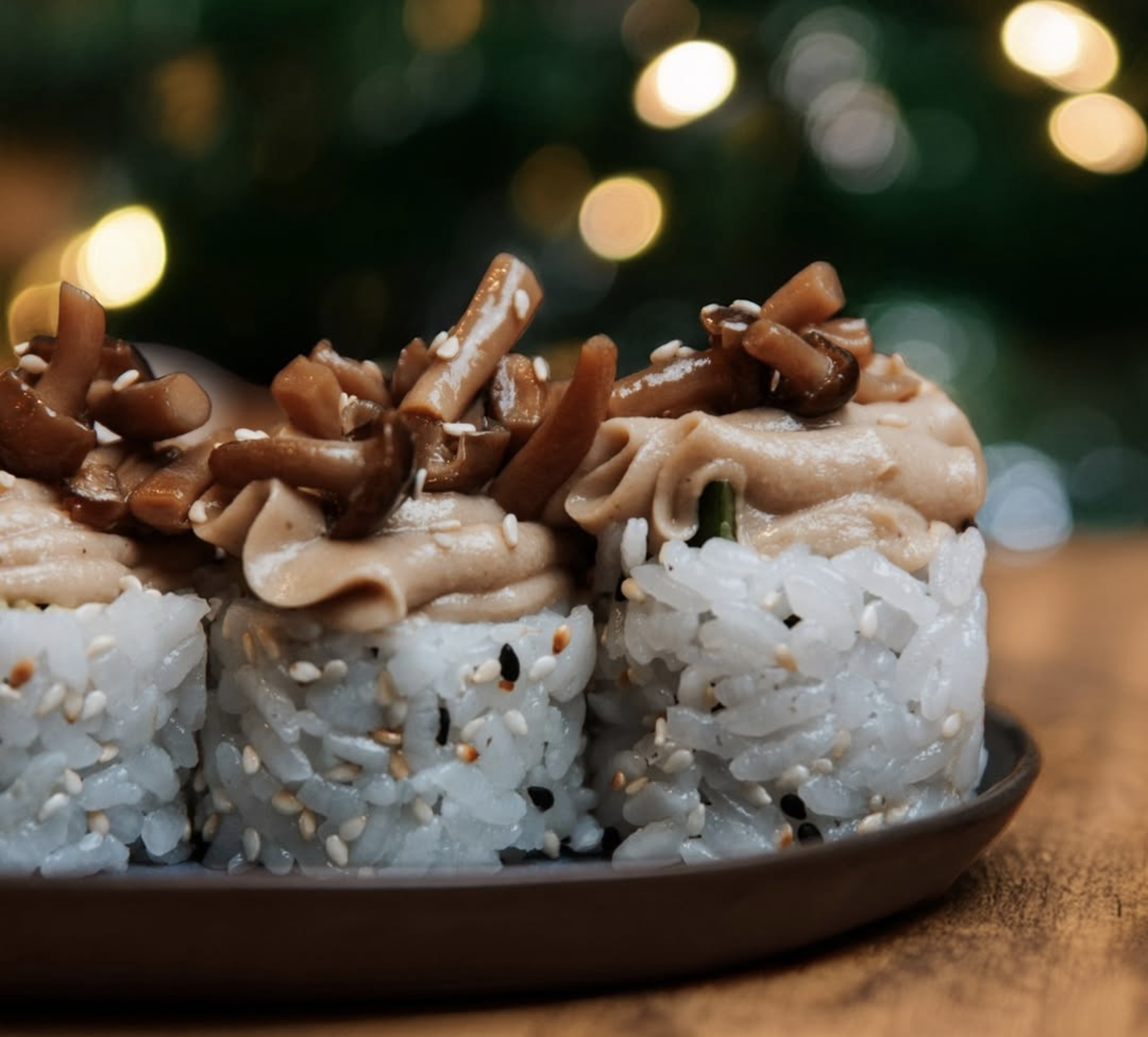
But you don't discover places like this through ratings. You discover them through vegan friends.
3. The Visibility Problem
Why not just use Google Maps?
Because Google rates restaurants, not vegan options. There are many sushi places in Kraków rated high with a "vegan option" that turns out to be a generic rice with cucumber. The vegan signal gets buried because it's only a fraction of the reviews.
How Do We Fix This?
So new vegans don't fail on willpower. They fail because of low average quality.
Bad meals don't just ruin a night out. They train people to give up.
If you're a new vegan and the first ten places you try are "highly rated" but mediocre, you don't conclude ratings are broken. You start asking yourself: am I really ready to give up good food forever?
Meanwhile, vegan restaurants are closing at alarming rates. New York lost 41 in three years. Not because demand disappeared—but because demand can't reliably find supply.
Fixing this means treating the two real questions as two separate scores:
- How good is the food?
- How vegan-friendly is it?
That's what I'm building with Spinach.
Spinach reads reviews, menus, and photos across platforms and tells you both, but separately, so you can find great vegan food early and often, whether it's a fully vegan spot or the best vegan dish in an otherwise omnivore restaurant.
The hard part of being vegan is not the lack of good food, but the problem with finding it.